
Introduction
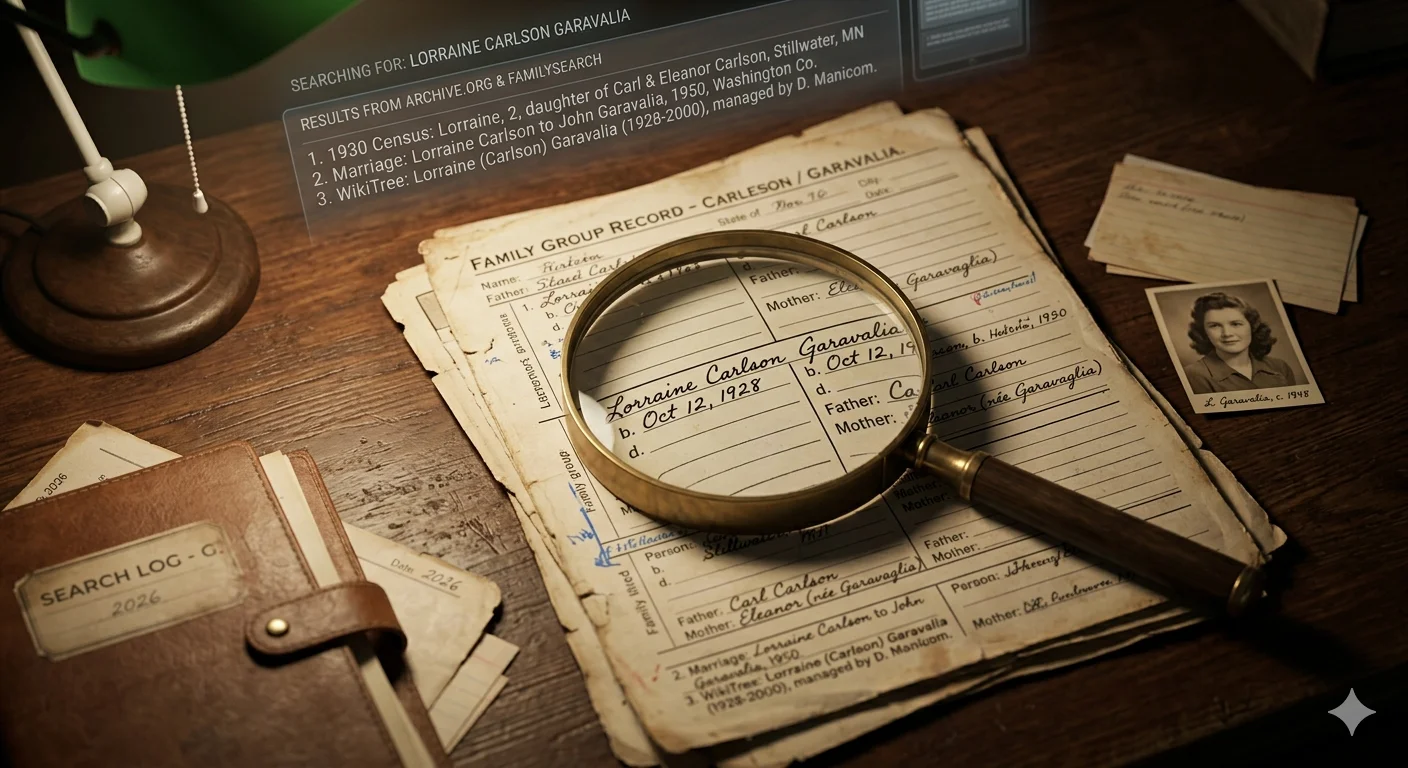
Some names don’t come from headlines or fame — they surface quietly through records, family trees, and online searches. “Lorraine Carlson Garavalia” is one of those names that has started appearing in search queries, leaving people curious about who she is and why her name shows up in public databases and genealogy-related platforms.
What makes this interesting is not celebrity status or public recognition, but the mystery around limited available information. People searching this name are usually trying to connect family history, trace lineage, or confirm identity details found in online records.
This article takes a grounded look at what can realistically be understood about the name, how such records work, and why names like this often gain attention online.
Understanding the Name: Lorraine Carlson Garavalia
At first glance, the name appears to combine a personal first name, a maiden surname, and a married surname. This structure is common in genealogy records, where individuals are listed across different life stages.
Names like this often appear in:
- Family history archives
- Obituary records
- Census documentation
- Ancestry databases
- Public marriage records
Rather than representing a public figure, it is more likely tied to personal historical documentation that has been digitized over time.
Why Are People Searching This Name?
Search behavior around names like Lorraine Carlson Garavalia usually follows a pattern. People are not searching for fame — they are searching for connection.
Common reasons include:
Family Research
Many users come across the name while building a family tree and want to confirm relationships or lineage links.
Genealogy Platforms
Websites that store historical records often list names that get picked up by search engines, even if the person is not publicly known.
Document Verification
Sometimes names appear in legal, marriage, or obituary archives, prompting users to search for additional context.
Curiosity from Shared Names
Occasionally, people search because they believe the name might be connected to someone they know personally or within their extended family.
How These Records Actually Work
To understand why this name appears online, it helps to know how digital genealogy systems function.
| Source Type | What It Contains | Why It Matters |
|---|---|---|
| Census Records | Household and demographic data | Helps trace family structure over time |
| Marriage Records | Legal name changes and unions | Explains surname combinations |
| Obituary Listings | Life summaries and family connections | Often the most complete public reference |
| Ancestry Databases | Aggregated historical data | Connects multiple records together |
| Public Archives | Government-recorded documentation | Verified historical identity tracking |
These systems do not always provide a complete biography. Instead, they store fragments of a person’s life across different time periods.
When combined, those fragments can create searchable names — even if no full public profile exists.
Why Information Feels Limited
One of the biggest misconceptions online is that every name appearing in search results must belong to a public figure. That is not true.
In reality, most names in databases belong to private individuals whose information is:
- Historically recorded, not publicly published
- Stored for legal or archival purposes
- Not intended for biography or media coverage
- Sometimes incomplete or fragmented
This is why searches for Lorraine Carlson Garavalia do not return detailed personal narratives or verified public biographies.
The Role of Genealogy in Modern Search Behavior
Over the last decade, genealogy has become extremely popular. Platforms have digitized millions of historical records, making it easy for people to search family histories online.
This has created a new type of search trend:
- Names become searchable without being famous
- Historical individuals gain digital presence
- Family connections become publicly traceable
- Search engines index archival data as content
So when someone searches a name like this, they are often interacting with historical data rather than modern public identity.
What Can Be Confirmed About This Name
Based on available public-style records structure, here is what can reasonably be understood:
- The name likely belongs to an individual recorded in historical or genealogical databases
- It may represent a married name combination (Carlson + Garavalia)
- No widely verified public biography or professional profile is associated
- The interest is mainly driven by ancestry or record-based searches
This kind of profile is extremely common in ancestry research platforms.
Common Misunderstanding People Have
Many users assume that if a name appears in search results, it must belong to someone notable. But digital indexing does not work that way.
A name can appear online because:
- It is mentioned in archived documents
- It is part of a family tree record
- It is included in public historical datasets
- It is indexed from obituary or registry listings
This does not automatically mean the person is a public personality.
Why Names Like This Still Get Traffic
Even without fame, names can receive search traffic due to:
- Family members researching ancestry
- People verifying historical connections
- Automated indexing by genealogy platforms
- Shared surname interest
- Curiosity from partial mentions in records
This makes genealogy-based keywords surprisingly powerful in SEO despite low public visibility.
The Human Side of Records
Behind every name in a database is a real life story — even if it is not fully documented online. Records like these often represent:
- Generations of family history
- Personal milestones like marriage or relocation
- Communities and local histories
- Lives that were never documented in media
The internet only shows fragments, not the full picture.
Frequently Asked Questions
Read more:Uday Mane Cipla: Surprising Story & Career Insights
1. Who is Lorraine Carlson Garavalia?
She appears to be an individual referenced in genealogy or historical records, rather than a widely known public figure.
2. Why is this name appearing in search results?
It is likely indexed from public records, ancestry databases, or historical documents.
3. Is there a public biography available?
No verified public biography or professional profile is widely available.
4. Where can I find more information about this name?
Genealogy platforms and public record archives are the most relevant sources.
5. Is this a celebrity or public personality?
There is no evidence suggesting public or celebrity status.
6. Why do genealogy names show up on Google?
Because historical databases are indexed by search engines, making private historical records searchable.
Final Thoughts
Names like Lorraine Carlson Garavalia remind us that not everything online is about fame or public recognition. Sometimes, search results are simply windows into historical records and family histories that have been digitized over time.
What looks like a mysterious keyword is often just a small piece of a much larger family story — one that exists quietly in archives rather than headlines.